Water Damage Restoration in the Desert
A burst pipe in a dry climate can still flood a home. Here's how water damage and mold connect — and why speed matters.
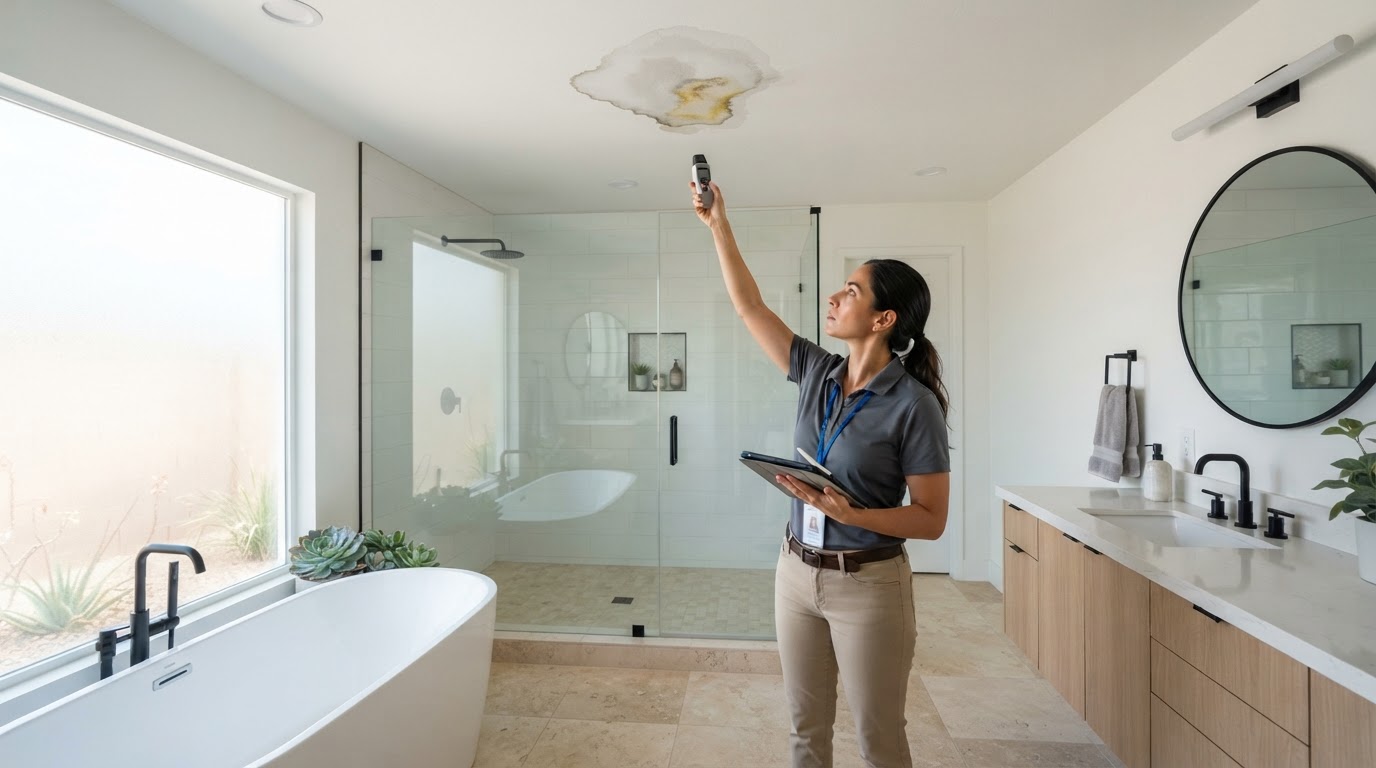
Phoenix may be a desert, but water damage is one of the most common insurance claims a Valley homeowner will ever file. A burst pipe, a failed water heater, or a monsoon roof leak can dump hundreds of gallons into a home in a single afternoon — and the clock starts the moment the water stops.
The 24-to-48-hour window
Mold can begin growing on damp building materials within 24 to 48 hours of a water event. That's why restoration is measured in hours, not days. The faster standing water is removed and materials are dried, the lower the chance mold gets established.
What restoration involves
Professional water damage restoration is a structured process:
- 1.Extraction — removing standing water with commercial pumps and vacuums
- 2.Removal — pulling out soaked materials that can't be saved (drywall, insulation, carpet pad)
- 3.Drying — running industrial dehumidifiers and air movers, often for several days, with moisture readings taken throughout
- 4.Cleaning — treating affected surfaces to prevent secondary growth
- 5.Repair — rebuilding the damaged area back to pre-loss condition
How water damage and mold connect
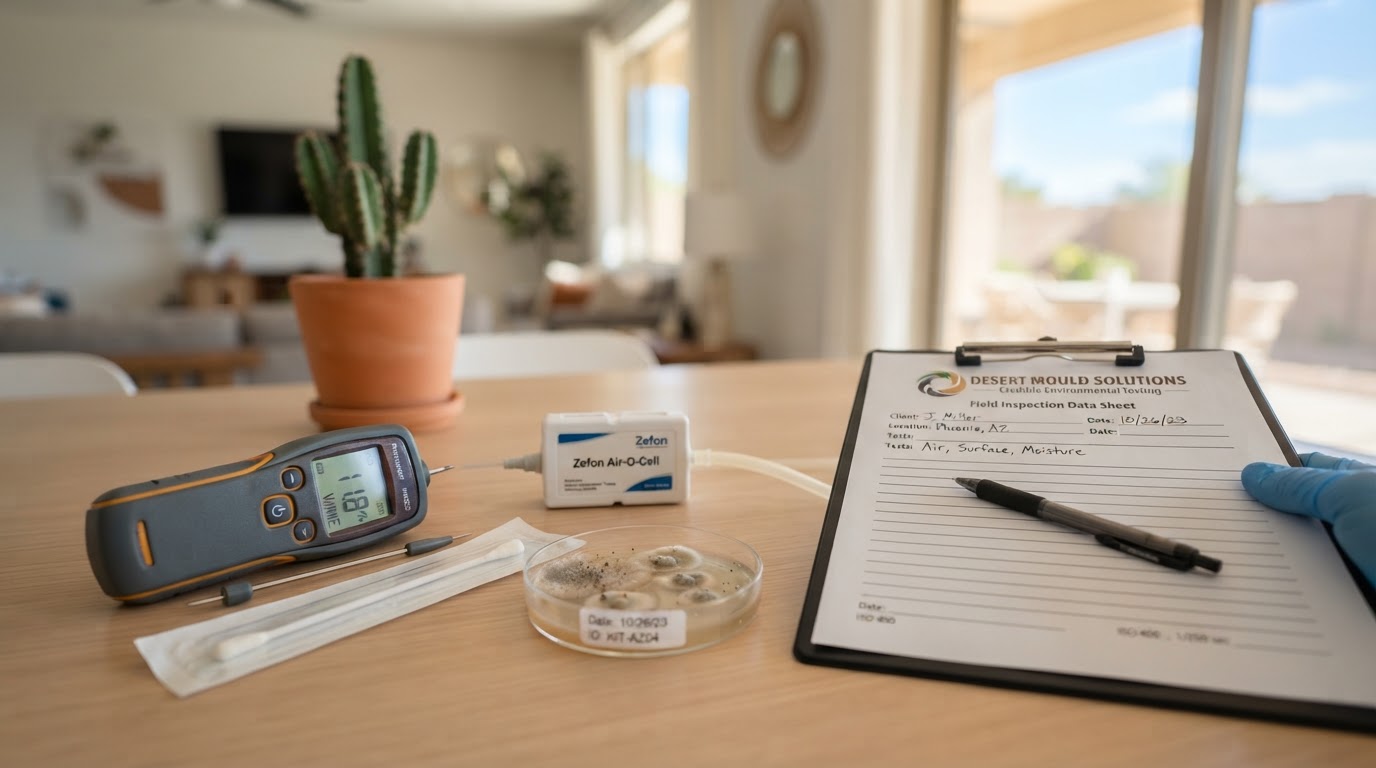
Every water damage event is a potential mold event. Even after visible drying, trapped moisture inside wall cavities or under flooring can keep conditions moldy for weeks. That's why a thorough restoration includes moisture verification — proving, with meter readings, that the structure is genuinely dry — and why a follow-up mold test is often the smart final step.
The desert difference
In a humid climate, wet materials dry slowly and mold risk stays high for longer. In the desert, the dry air helps — but only at the surface. Inside walls and under floors, where air doesn't circulate, moisture can linger just as long as it would anywhere else.
The takeaway
If you have a water event, treat the drying as the project, not the cleanup. The work that happens in the first 48 hours does more to prevent mold than anything you do afterward. And if you're unsure whether the structure dried completely, a moisture inspection is the way to find out.
Ready to talk to a professional?
Call our featured local provider, ALM Services, LLC.