Understanding the Mold Inspection Process
From the first phone call to the final report, here's what actually happens during a professional mold inspection.
If you've never had a mold inspection before, not knowing what to expect can keep you from scheduling one. Here's a plain-language walkthrough of how a professional inspection typically unfolds in a Phoenix-area home.
Step 1 — The consultation
It starts with a conversation. The inspector asks what you've noticed — odors, water stains, allergy symptoms, a recent leak — and where. This context tells them where to focus and what kind of inspection makes sense.
Step 2 — The visual assessment
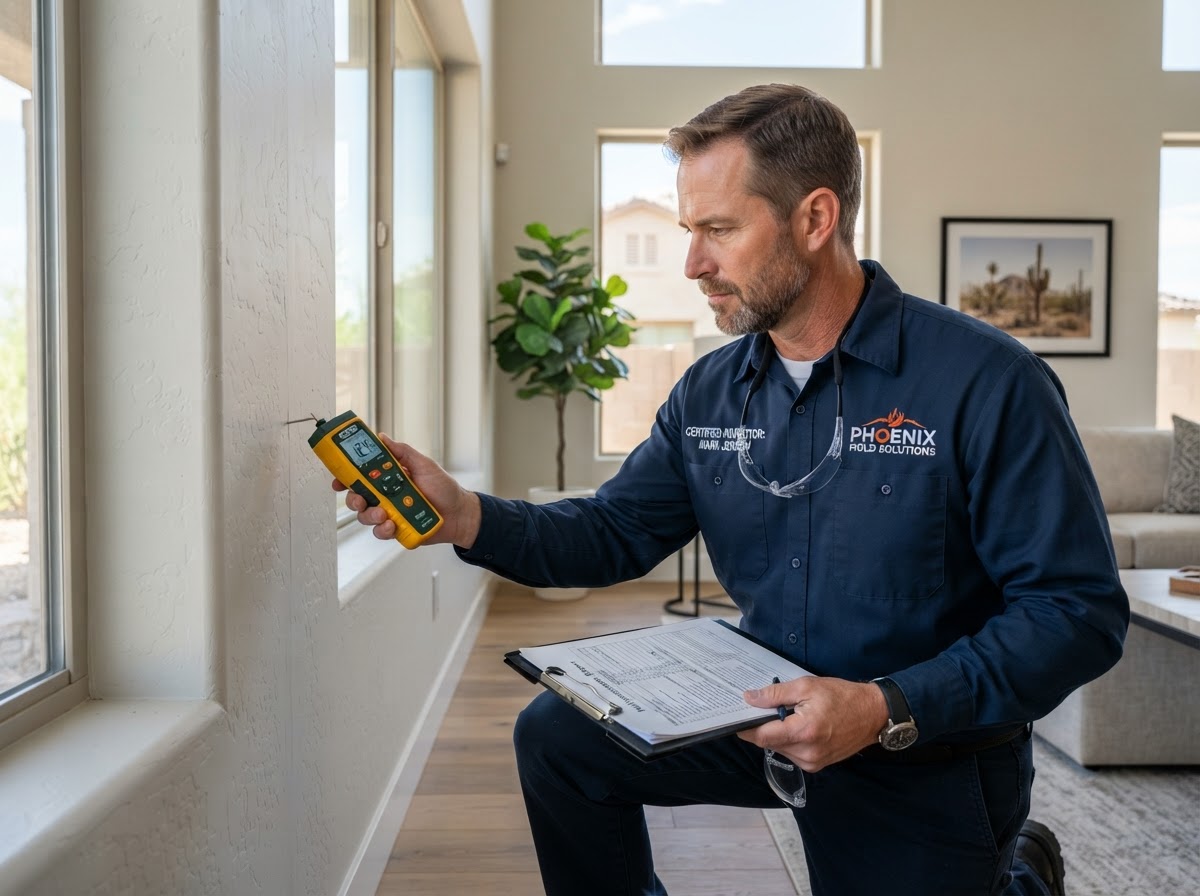
The inspector walks the property, inside and out, looking for the visible signs of moisture intrusion:
- Water stains and discoloration on ceilings and walls
- Cracked or degraded caulk around windows and doors
- Soft or buckling baseboards
- Roof and flashing issues visible from the exterior
- Attic and crawlspace conditions where accessible
Step 3 — Moisture mapping
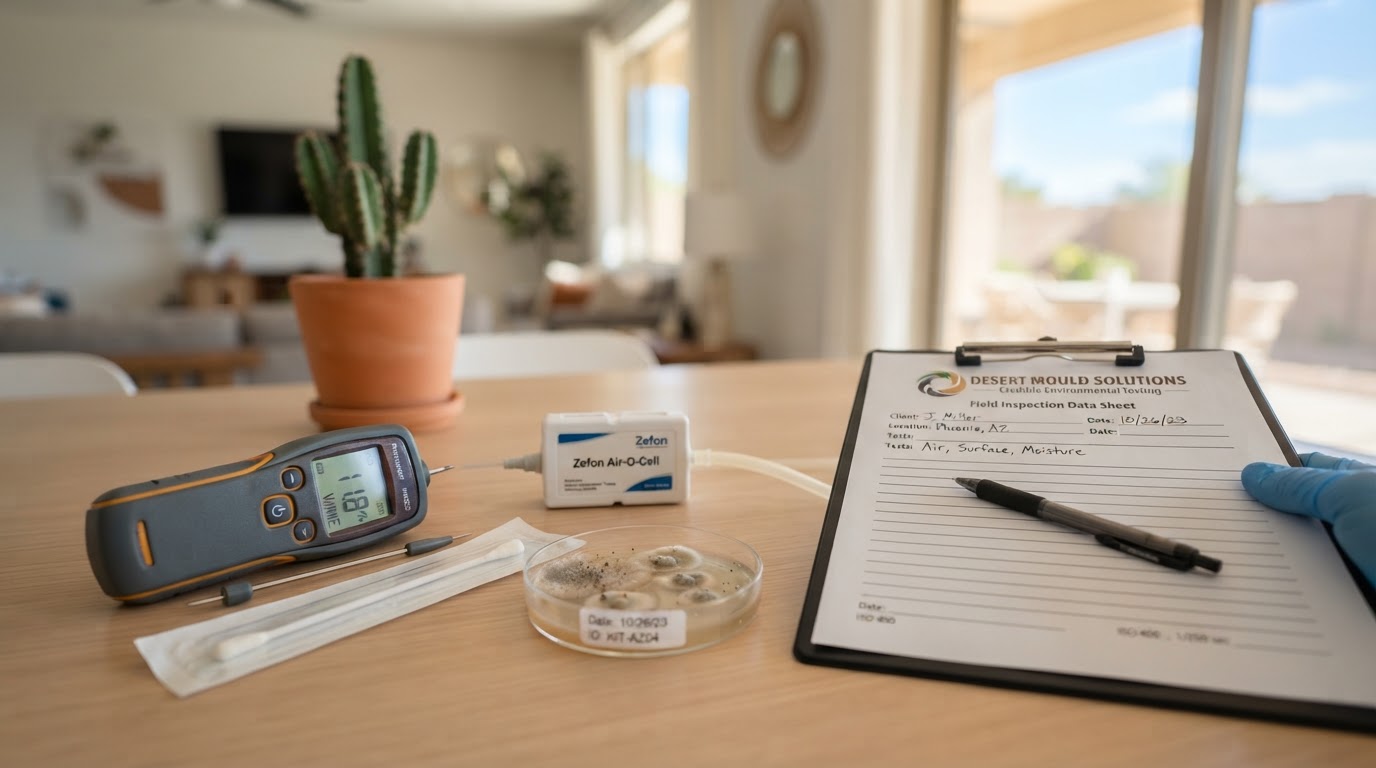
Using a moisture meter and often a thermal camera, the inspector measures the moisture content of building materials and maps out temperature differences that reveal hidden dampness. A wall that looks dry to the eye but reads high on the meter is a common find.
Step 4 — Sampling
If the inspector suspects hidden growth, they collect samples. Common types include:
Air sampling
A pump draws a known volume of air through a cassette, which is sent to a lab and compared against an outdoor baseline sample collected at the same time.
Surface sampling
Tape lifts or swabs collect material from a visible spot to identify the specific mold present.
Bulk sampling
In some cases a small piece of material is removed for analysis.
Step 5 — The lab analysis
Samples go to an independent laboratory. Results typically come back within a few business days and report the types and concentrations of mold found.
Step 6 — The report
You receive a written report that explains what was found, where, what it likely means, and what to do about it. A good report is the bridge between "something feels off" and a clear plan of action.
What an inspection is not
An inspection is informational. It tells you the condition of your home and the scope of any problem — it does not, on its own, fix it. The report's findings guide the next steps, whether that's a small DIY cleanup, a full remediation, or simply peace of mind.
Ready to talk to a professional?
Call our featured local provider, ALM Services, LLC.